
Treating Disease Before It Arises
The Chinese Medicine Principle of Zhì Wèi Bìng (治未病)

What if healthcare didn't always begin when you became sick?
We often think about our health most seriously when something goes wrong.
Pain appears. Sleep becomes difficult. Digestion changes. Energy disappears. Symptoms persist. Eventually, we seek help.
But Traditional Chinese Medicine has long contained another idea:
What if we paid attention earlier?
This principle is known as: 治未病 — Zhì Wèi Bìng
Often translated as “treating disease before it arises” or “treating what is not yet disease.”
It is an ancient idea, but one that feels remarkably relevant to modern life.
Zhì Wèi Bìng does not simply mean trying to prevent every possible illness. Its meaning is broader and more nuanced.
It asks us to consider health before illness becomes firmly established, to recognise changes in the body's patterns, to intervene appropriately when problems begin to emerge, and to try to prevent an existing condition from progressing or recurring.
In other words:
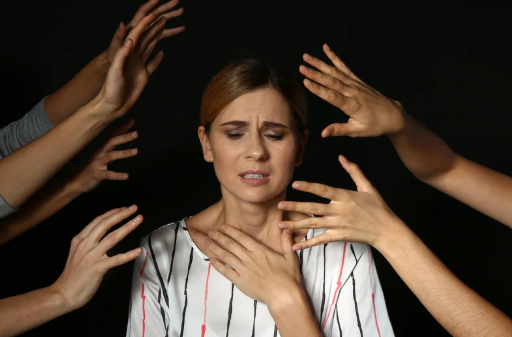
Don't only pay attention to the body once something has gone seriously wrong.
Where does Zhì Wèi Bìng come from?
The concept has deep roots in classical Chinese medicine and is associated particularly with the Huangdi Neijing (Yellow Emperor's Inner Classic), one of the foundational texts of Chinese medicine.
The Neijing presents an approach in which the skilled physician is concerned not only with treating established illness but also with understanding the conditions from which illness may develop.
A famous idea from the text is often compared to digging a well only after becoming thirsty or preparing weapons only after battle has already begun.
The message is powerful:
Why wait until the problem is fully established before responding?
This philosophy eventually became expressed through the concept of Zhì Wèi Bìng — treating what is not yet disease.
Zhì Wèi Bìng is more than “prevention”
When we hear the word prevention today, we might think about screening programmes, vaccination, exercise, nutrition, avoiding smoking or monitoring blood pressure.
These are extremely important aspects of modern preventive healthcare.
But Zhì Wèi Bìng comes from a different medical framework.
Chinese medicine traditionally observes patterns.
Sleep. Appetite. Digestion. Bowels. Energy. Temperature. Menstruation. Emotional wellbeing. Pain. Thirst. The tongue. The pulse. How symptoms change with the seasons, stress, food, activity and rest.
Rather than asking only:
“What disease does this person have?”
Chinese medicine also asks:
“What is changing in this person?”
That distinction is important.
The body often changes before we give those changes much attention
Many of us recognise the experience of simply not feeling quite right.
Perhaps:
sleep has gradually become less restorative;
digestion isn't as comfortable as it used to be;
energy repeatedly crashes at a particular time;
headaches have become more frequent;
menstrual patterns have changed;
stress is affecting the body more noticeably;
appetite or bowel habits have altered;
tension is becoming persistent;
recovery takes longer than it once did.
None of these automatically means that disease is developing.
And unexplained, persistent, worsening or concerning symptoms should always receive appropriate medical assessment.
But Zhì Wèi Bìng encourages something very simple:
Pay attention to change.
Rather than continually overriding the body's signals, we can become curious about them.
Three ways of understanding Zhì Wèi Bìng
The principle can be understood at several stages of health.
1. Supporting health before illness develops
This is where Zhì Wèi Bìng overlaps beautifully with Yang Sheng (养生) — nourishing life.
Sleep, appropriate nourishment, movement, emotional wellbeing, rest and living with some awareness of our individual needs all form part of the traditional philosophy of health cultivation.
The intention isn't to make ourselves invulnerable to illness.
It is to support health while we have it.

2. Recognising and responding to change early
Sometimes the body begins behaving differently before a clearly established condition is present.
Chinese medicine traditionally pays considerable attention to these changing patterns.
A practitioner may explore not only the main complaint but also sleep, digestion, appetite, energy, bowel habits, temperature, emotions, menstrual health, tongue and pulse.
The aim is to understand the whole pattern, rather than viewing each symptom completely in isolation.
3. Preventing progression and recurrence
Zhì Wèi Bìng is also relevant once illness has already occurred.
At this stage, the principle is not literally about preventing the initial disease—it has already happened.
Instead, attention may turn toward limiting further progression, supporting recovery and reducing the likelihood of recurrence where possible.
This is another important distinction.
Chinese medicine's traditional concept of prevention therefore extends across a continuum:
Preserve health → recognise change → respond early → support recovery → reduce recurrence.
What does “imbalance” mean in Chinese medicine?
The word balance is used constantly in wellness marketing, sometimes so loosely that it becomes almost meaningless.
In Chinese medicine, however, balance refers to relationships within a larger pattern.
Yin and Yang.
Qi and Blood.
Activity and rest.
Warmth and coolness.
Consumption and restoration.
The internal body and the external environment.
A Chinese medicine practitioner isn't necessarily looking for one isolated abnormality.
We are looking for relationships and patterns.
For example, two people may both say:
“I'm exhausted.”
Yet one may feel cold, have poor appetite and loose stools and feel worse after exertion.
Another may sleep poorly, experience night heat, feel restless and become increasingly tired as the day progresses.
The symptom is the same.
The pattern isn't.
This is one reason Chinese medicine treatment is traditionally individualised.
Paying attention doesn't mean becoming afraid of symptoms
This is particularly important.
Zhì Wèi Bìng should not encourage us to become hypervigilant about every sensation in the body.
Bodies fluctuate.
We occasionally sleep badly. Digestion changes. Energy varies. Emotions affect us. Menstrual cycles aren't identical every month. Stressful weeks happen.
The goal isn't to constantly search for disease.
It is to develop a reasonable awareness of our usual patterns so that meaningful changes are easier to recognise.
There is an enormous difference between:
being frightened of your body
and
knowing your body.
Zhì Wèi Bìng is much closer to the latter.
Where do acupuncture and Chinese herbal medicine fit?
Within Traditional Chinese Medicine, acupuncture and Chinese herbal medicine are only parts of a wider approach.
Depending upon the individual, traditional treatment may also consider:
food and dietary habits, movement, Qi Gong, sleep, emotional wellbeing, work and rest patterns, seasonal changes and other aspects of daily life.
Chinese herbal formulas are traditionally selected according to an individual's pattern rather than simply according to the name of a condition.
Likewise, acupuncture treatment is usually based on the person's presentation rather than applying exactly the same points to everyone with the same complaint.
This is why Chinese medicine consultations can involve questions that initially appear unrelated.
Your practitioner isn't necessarily interested only in where it hurts.
They may also be trying to understand the environment in which that symptom is occurring.
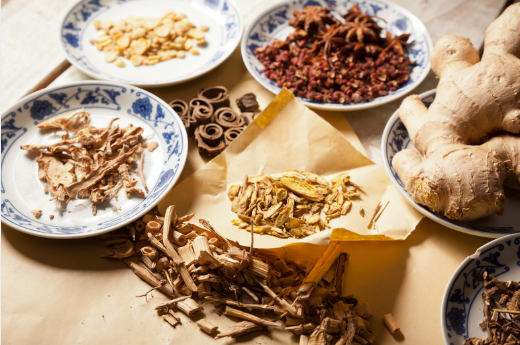
Chinese Herbal
Zhì Wèi Bìng and modern medicine are not competitors
This is an important distinction.
The traditional philosophy of Zhì Wèi Bìng should not be presented as an alternative to evidence-based preventive healthcare.
Modern medicine provides screening, vaccination, diagnostic testing, risk-factor management and early detection strategies that simply did not exist when the classical Chinese medical texts were written.
These are enormously valuable.
Chinese medicine offers a different lens: paying attention to the individual, their patterns and the way their health changes over time.
The two ideas do not need to compete.
Someone can attend appropriate health screening, seek medical investigation when symptoms require it, follow prescribed treatment and pay closer attention to sleep, nutrition, movement, stress and changes in their general wellbeing.
From Yang Sheng to Zhì Wèi Bìng
In my previous article, Preserving Health and the Natural Lifespan, I explored the Chinese medicine principle of Yang Sheng (养生) — nourishing life.
Yang Sheng asks:
How can we live in a way that nourishes and preserves health?
Zhì Wèi Bìng takes us one step further:
Can we recognise change and respond before a problem becomes more deeply established?
Together, these concepts reveal something fundamental about the traditional Chinese understanding of healthcare.
Chinese medicine was never concerned only with what to do after illness appeared.
It also asked how we might live while healthy, recognise changes in ourselves, respond appropriately when something begins to shift, and support the body throughout the different stages of life.
Perhaps the first step is simply noticing
How are you sleeping?
How is your digestion?
How is your energy?
How do you respond to stress?
Has something changed?
How well are you recovering?
Are you constantly pushing through exhaustion?
Do you feel different from six months or a year ago?
These questions don't diagnose disease.
But they can encourage us to become more engaged with our health.
And perhaps that is the enduring relevance of an idea that began thousands of years ago.
Don't wait until the body is shouting before you begin listening.
Zhì Wèi Bìng (治未病) reminds us that healthcare can also involve what happens before disease, during its earliest changes, and after illness as we work to preserve health going forward.
That is a very different way of thinking about what it means to care for ourselves.
This article is provided for general educational and wellbeing purposes. Traditional Chinese Medicine concepts describe a traditional medical framework and should not be used to diagnose or exclude disease. Chinese medicine does not guarantee the prevention of illness. New, persistent, worsening or concerning symptoms should be appropriately medically assessed. Do not delay recommended medical screening, investigation or treatment.